The Man of Steel #2 – On this date 40 years ago

The Man of Steel #2
Released July 3, 1986

John Byrne – Writer & Penciller
Dick Giordano – Inker
Tom Ziuko – Colorist
John Costanza – Letterer
Andy Helfer – Editor

This comic is the most Christopher Reeve Superman comic in existence.

By his own admission, Byrne grew up as a fan of THE ADVENTURES OF SUPERMAN TV show, yet it’s impossible to read this and not feel the influence of the 1978 Richard Donner movie. Though Lois Lane is the focal character driving this issue, it’s chock full of Superman doing good deeds and thwarting bewildered criminals all over Metropolis.

Scenes like this pretty clearly take inspiration from moments in the first film in the tone of Superman stopping a would-be burglar from scaling a building and asking, “Hey there, something wrong with the elevators?”

If you’ve seen the movie, it’s pretty much impossible to read Superman’s dialogue to this would-be purse snatcher and not hear Christopher Reeve’s polite voice.

I like his solution to restraining the crook until the police can come, and his polite way of reprimanding her about the volume level on her boombox feels like pure Reeve.

I love when writers do this take on Superman – the sort of self-aware boy scout with a hint of snark. Stoic Superman gets boring fast, but “polite but firm?” I will lap that up every time and this issue is full of it. My memory is that Byrne doesn’t go to this well often afterwards, but for now it’s fun to see a Superman enjoying his powers and having fun with people’s bewildered reactions to him.

More comics should be fun like this. (And this issue also is our introduction to the Metropolis Special Crimes Unit, who quickly become known to us as the division that handles most of the superhuman crime.)

But as the cover indicates, the real star of the issue is Lois Lane and how Superman’s first public appearances in costume send her on a mad chase through Metropolis, determined to get an interview with him. Of course, she always arrives just a tad too late to find him. Byrne drives this home with a page that very economically gets across how many close calls Lois has over the course of the week.

On a side note – geez was this a crazy week for Metropolis or what? Imagine all the terrible things that would have happened if Superman hadn’t picked this week to go public.

At one point, we see Lois frustrated that the other papers in Metropolis have picked up on and are using her “Superman” moniker for this new arrival. This confirms for us that while reporters don’t actually write their own headlines, she must have referred to him as a “mysterious superman” within the body of her story.

If I’m not mistaken this also makes for the first time in comics continuity where Lois Lane names Superman. In all prior instances, Superman arrives in Metropolis using the name and frequently has been going by some version of that nom de voyage since he was Superboy. Of course the VERY first time in the mythos we saw Lois establish his name was in the Reeve film, so add one more detail to the list of ways Richard Donner and screenwriter Tom Mankiewicz (or possibly Robert Benton and David Newman) influenced the Superman comics.

We also get a small tease of Lex Luthor, concealed here in silhouette as he has a minion extend his invitation to Lois. It’s clear that even this early on, there’s no love lost between Lois and the other LL. It’s always good to see Lois blow Luthor off.

You might have noticed that Lois has black hair on the cover, but she’s a brunette on all of these interior pages. In the first printing of this miniseries Lois had black hair. That became brunette for some reason when the main titles relaunched after this. I assume the later printings fixed the color for consistency.

After always arriving too late to catch Superman, Lois ends up attracting Superman’s attention when her car ends up in the water. Fortunately, Superman hears her cries for help and promptly rescues her. He even takes her home and doesn’t even have to look up the address. (Stalking your crush much, Clark?)

In another scene reminiscent of the Donner film, Lois persuades him to stay for an interview. Once again, it’s like your brain automatically hears the voices of Kidder and Reeve in this exchange.

On his way out, Superman drops two tidbits of information: that he doesn’t think anything he’s told her will be very useful (more on that in a second) and that he couldn’t help but notice she had an aqualung under her car seat BECAUSE OF COURSE SHE DID.

That’s our Lois, willing to risk drowning for the sake of a story, but at least using some kind of precautions. Barbara Walters wouldn’t have been that tenacious, I can tell you that.

We don’t have to wait long to find out what Superman meant with his other parting shot, as Lois arrives at the Daily Planet with her exclusive interview, only to be told by Perry White (who, like Jimmy Olsen also makes his Post-Crisis debut in this issue) that she’s too late. She was beaten to the Superman exclusive by Perry’s latest hire – Clark Kent!

Hi, I hate this part.

Clark essentially writing stories about himself is a huge breach of journalistic ethics. I don’t think it’s ever been acknowledged within the mythos until last year’s James Gunn SUPERMAN film, but it’s something that no reputable journalist should do. We had a lot of conversations about this as the staff of SUPERMAN & LOIS and even before the Gunn movie, I’d heard a number of notable Superman writers and artists call this out. You can’t police every writer working on the character, but I remember at least one, possible two of those writers taking some solace in the fact that at least they never wrote Clark covering himself as the story.

Yes, I know it’s a comic book, and yes, we all wink at this and move on, same as we do with Spider-Man “posing” for Peter Parker, but it still kind of sucks that Clark didn’t really earn the story that got him his job. This version of Clark is supposed to be a very good journalist, so it would have been a great idea to see him prove that with a different story.

I know, I know. Repeat to yourself “It’s just a comic. I should really just relax.”

The other reason for Clark to “beat” Lois here is to give a reason for Lois’s antagonism towards Clark. Because this version of Clark is going to be “the real guy” (as opposed to a nerded-up performance functioning as a disguise), Lois’s rejection of him can’t be because he’s an unworthy dweeb. Thus, now it’s a professional rivalry that will keep them at arms length from each other.

Remember, this is 40 years ago. Superman and Lois hadn’t even been engaged in actual continuity before and there was a sense that their relationship probably wouldn’t be allowed to evolve to that point in mainline continuity. The idea that they were firmly “endgame” simply didn’t exist. Comics most frequently stayed trapped in a status quo that never was allowed to go too far. When you can’t tell the end of that story, you’re going to slow-roll the beginning as long as possible. Gotta draw out that sexual tension before putting the characters together and breaking them up.

Today, you’d likely approach the relationship in a very different way because you’re writing Superman and Lois Lane in a world where Lois is the victor in any battle over Superman’s affections. This has been true since at least 35 years ago when they got engaged and she learned his secret. They’ve been married for in main continuity 30 years (barring one hiccup in New 52 continuity.)

Lois Lane won. Period. Lana Lana? Lori Lemaris? Cat Grant? They’re always gonna be also-rans. The road always is going to lead to Lois. That doesn’t mean in any reboot you can’t get any fun out of either of them playing the field. If you’re doing a restart in a medium where you need to generate a LOT of stories, then you almost certainly want to take your time and use all the prior love interests in stories leading up to the eventual pairing. But comics being what they are now, you’re not going to be able to do that for long before people get impatient for the Clark/Lois pairing.

And when you’re dealing in a franchise that gets only a very few at-bats – like a feature film franchise – it’s much more likely that Clark/Lois is going to cut to the chase right away. The last two movie franchises are evidence of this, as both of them dispensed right away with the idea that Lois isn’t in on the secret.

Lois always wondering if Clark and Superman were the same person used to be the tension that drove so many stories and the last three live action incarnations haven’t even bothered with it. That shows you how far the mythos have evolved on-screen. To more than one generation – Lois knowing his secret IS the status quo.

All of this to say that I get why Byrne gave their relationship a different sort of spin from the start. It’s completely defensible then and now to make them intense professional rivals. It’s just a shame that the wedge issue here makes Clark look like a terrible journalist.


Discover more from Super Fan XL – 40 Years Of Post-Crisis Superman

Subscribe to get the latest posts sent to your email.

9 responses to “The Man of Steel #2 – On this date 40 years ago”

  1. Ben Herman: In My Not So Humble Opinion Avatar

    Hi there! I’m really enjoying your blog so far. Post-Crisis Superman is *my* Superman, so I’m looking forward to you putting together retrospectives on this era issue by issue.

    I did not begin really following the Superman titles regularly until 1990, but I somehow or another picked up Man of Steel #2 back when it first came out. I remember really liking it. As someone who had already read a handful of the pre-Crisis Superman stories, I did not like how Lois Lane was depicted a lot of the time, always trying to prove Clark Kent was Superman or attempting to trick Superman into marrying her. So, I really did like this new, sharp, clever version of Lois that Byrne introduced.

    I have to admit, back in 1986 it did not occur to me to question the ethics of Clark writing a newspaper story about himself. I do seem to recall that Byrne did finally sort of address this question in Action Comics #597, with Clark rationalizing to himself that it was the only way to get his foot in the door at the Daily Planet, but Lois is understandably angry at Clark having an unfair inside advantage over her after Ma & Pa Kent convince her that Clark and Superman were raised as brothers.

    Also, yeah, I’m glad that the recent movie versions of Superman have had Lois in on the “Clark Kent is Superman” secret right from the start.

    Finally, I’m so glad you gave credit to Tom Mankiewicz here! I’m always seeing people say “Ooooh, The Godfather author Mario Puzo wrote the first Superman movie!” But it was Mankiewicz’s uncredited rewrites that turned it into a filmable screenplay, and I wish he was recognized much more often to his important contributions to that movie.

    1. Patrick Casey Avatar
      Patrick Casey

      We did a series of podcasts on the various Superman drafts leading up to the original film in case you’re interested in a deep dive into the actual Puzo first draft – and I agree that Mankiewicz and the others clearly did a lot of to improve upon it: https://podcasts.apple.com/fm/podcast/superman-78-part-1-of-2/id1450737048?i=1000712062583

  2. davethomer Avatar
    davethomer

    I’m 100% in agreement with you on the ethics of Clark writing stories about himself, and I’m glad you mentioned Peter Parker and Spider-Man as well. Journalism is one of those things that rarely gets covered well in fiction. I don’t put all the blame on Byrne and company, since I’m pretty sure the “Clark beats Lois to Superman stories” trope appeared in pre-CRISIS comics and the 90s animated series, too. And to an extent I can see not going too deep into things, because Clark and Lois are both privy to a LOT of information that I think would put them in a pretty precarious situation, ethics-wise, either based on how they got it OR the fact that they don’t reveal it. So on the one hand I get it, but on the other I find it disappointing. I much prefer the way that LOIS & CLARK handled Clark impressing Perry enough to get a job at the Planet.

    Now that you mentioned the parallel with the first Reeve movie, it makes me wonder about the trope of origin stories starting off with the superhero going after regular criminals and then the supervillains only show up afterward. I think that’s part of where the “the villains are all really the hero’s fault!” criticism comes from. But I guess the story would be a lot bleaker if it started with a supervillain running around unopposed for a while. (On the other hand, it’s not like there weren’t already supervillains in the DC Universe at this point.)

    But the big story is Lois, of course, and I’m sure this is gonna be a big thread for you over the next five years or so. I wonder if you have any thoughts on the relative importance of the comics and the other-media adaptations in helping to firmly establish the Lois and Clark relationship in the public eye. How much did LOIS & CLARK influence things? Were the SMALLVILLE writers influenced by ten years’ worth of comics at that point? I know there were writers at DC who wanted to get rid of their marriage for a long time, and some of them thought they finally pulled it off with the New 52. I find it fascinating, especially since I like it when a long running series manages to make a permanent change in the status quo as a general rule, and I like the Clark and Lois relationship so much better when they can be honest with each other.

    1. bitterscriptreader Avatar

      When it comes to the impact of the comics on other media adaptations, I think it actually takes a long time for the comics to have a substantive impact on them. It hadn’t occurred to me until Zack Snyder talked about how THE DARK KNIGHT RETURNS was a formative text for him…. thirty years after it came out.

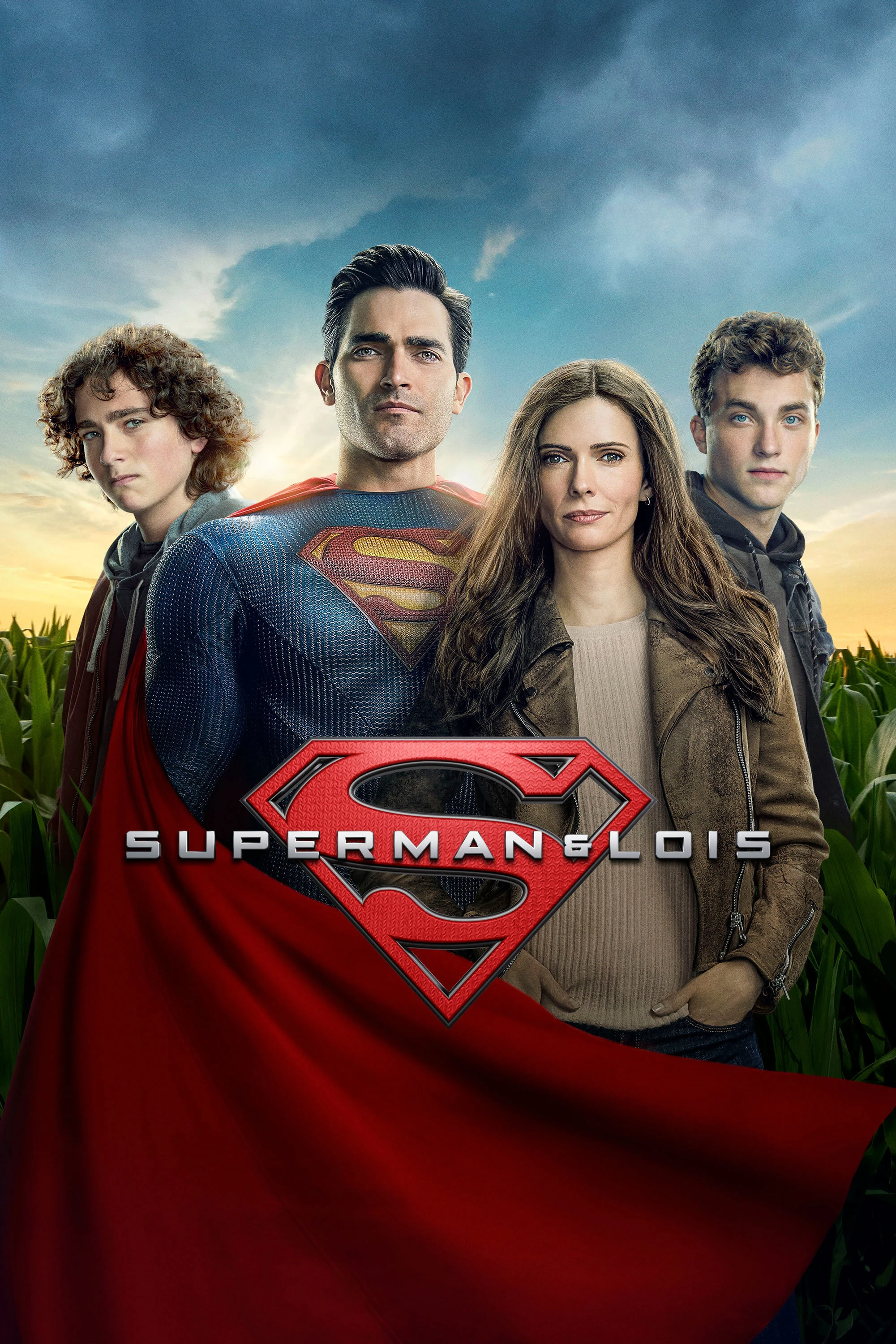
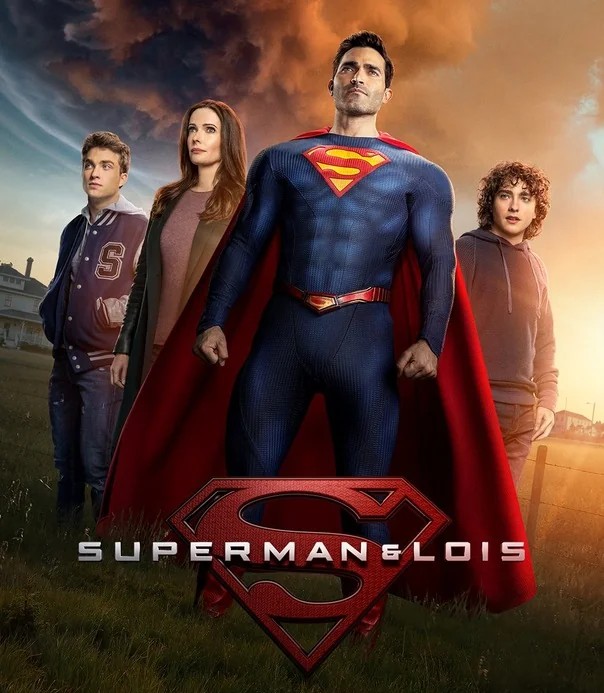
      I think some things in the books can have an impact in the short term, but you have to wait a couple decades for people who grew up on those books to come into power and REALLY bring all that in. And I’m kind of talking about myself here because on SUPERMAN & LOIS we had at least four people in that room who were dedicated readers of the Triangle Era in their youth and it’s probably not a coincidence that so many characters we used for the first time – Steel, the Eradicator, Kilgrave, Mannheim – harkened back to that era.

      But we also made Lois and Clark parents, as had been done in the recent REBIRTH run. You can definitely point to that influence… right along with the distinction we had two teenagers instead of one ten year-old boy.

      LOIS & CLARK is often cited as having taken influence from the Byrne reboot. There’s some truth to that, but I find it to be largely limited to making Lex a businessman, keeping the Kents alive and adding the character of Cat Grant. This is where it might be helpful to know that the earliest seeds of what became L&C were a bible for a Lois Lane show that was prepared by Superman editor Mike Carlin and DC President Jenette Kahn. In terms of storytelling, I don’t think L&C feels at all like the Triangle Era. And I REALLY don’t think that staff had a lot of comic book readers on it. On the other hand, they DID get Lois & Clark actually married, something that doesn’t happen in filmed media again until S&L.

      I’m inclined to say the same about SMALLVILLE. One thing we do know is that for creators Al Gough and Miles Miller, their biggest influence was the first two Reeve movies. When Annette O’Toole auditioned for Martha, they were unaware she was Lana in SUPERMAN III. As the show went on, there were more comics people like Jeph Loeb and Mark Verheiden involved and so maybe you can see some elements from the comics creep in, though again, it doesn’t feel terribly specific to the comics of the time.

      I think whatever’s recent in comics continuity can have some impact… but creators are always going to lean on the versions they LOVE and so for the most passionate comic book fans, that’s probably like putting a thumb on the scale for whatever they have the strongest childhood nostalgia for.

      1. davethomer Avatar
        davethomer

        All of that makes sense to me. When WANDAVISION and FALCON & WINTER SOLDIER came out, it was striking to me that they both had roots in storylines that were published just before and just as I was starting to regularly read comics in 1989.

        The storytelling on LOIS & CLARK doesn’t feel like the storytelling in the 90s comics, but along with the things that you mentioned, there’s the very big change of focusing on Clark as a person rather than a disguise. All of those (maybe with the exception of Cat Grant) are fundamental to what I now think of as my preferred version of the characters, and in the early 90s I think they were very surprising to the audience that wasn’t the comics. I didn’t know (or maybe I just didn’t remember) the info about the Lois bible, but that would definitely make a stronger link.

        I guess what I’m wondering about is less the question of “how much do the comics influence the other media?” and more “How much do comics affect the public image of the characters vs. the other media?” Because comics readership is still a niche compared to TV and movies.

        My daughter and I have both watched a lot of SMALLVILLE in the last few years, but only the late seasons after Millar & Gough left, which in a lot of ways is a different show. One of my daughter’s favorite bits from Tom Welling and Michael Rosenbaum’s Talkville podcast is from one of the times they have Erica Durance on as a guest and Rosenbaum asks Durance something like “When you got the part, did you have any idea that they’d ultimately pair you and Tom?” and Welling interrupts and just says, “Well, she was playing Lois,” like it’s the most obvious thing in the world that of course Lois and Clark will ultimately get together. And to my in-her-20s daughter who has watched SMALLVILLE and SUPERMAN (2025) and MY ADVENTURES WITH SUPERMAN, yeah, it is a no brainer. But to those of us who grew up with the Donner film and the 80s comics, it’s a revolutionary development.

  3. bitterscriptreader Avatar

    @DaveThormer – To be fair even back in the days where there was a status quo that could never be broken, Lois had her own book with “SUPERMAN’S GIRLFRIEND” as part of the title. So even without the wedding in the comics, it would have been justified for Tom to assume it as an obvious trajectory for her.

    But as to your point about “how much do the comics affect the wider perception of the characters?” I think the adaptations are always going to have a more immediate and wider-felt impact. I’m sure that the MCU incarnations of all those characters are going to cast a longer shadow over any reboot than whatever the comics status quo is at the time. None of these movies or TV shows are a success without a huge wider audience. I think you could make the most comics-accurate adaptation of any character and if it doesn’t speak to a broad audience, it’ll be DOA.

    One reason I think it was easier to break up Peter Parker and Mary Jane is that when that happened, only three SPIDER-MAN movies existed and they weren’t married in any of them. Clark and Lois got married on TV at the same time as in the comics. Even though ratings were on the decline then and it ended up being the final season of the show, the associated publicity probably didn’t hurt as far as locking that in the popular imagination.

    Batman might provide an even more valuable contrast. He’s cycled through multiple love interests over the year, enough that the only one that has been a factor in two different movies was Rachel Dawes… an original character. (Unless you count Catwoman and if she wasn’t in the final scene of RISES I’m not sure their relationship in the rest of the movie reaches that level.)

    In any subsequent Batman adaptation, you could have up to five or six good choices for his love interest… but right now in the comics, Catwoman is played as his endgame. And even if you broke them up for good, it’s not going to inspire the outrage you’d get from breaking up Lois and Clark.

    1. davethomer Avatar
      davethomer

      Those are good contrasts. Heck, with Peter and MJ, I saw them get married in the newspaper strip long before I started regularly reading comics!

      I also think Marvel’s editors have been more stubborn than DC’s editors over the last 20 years. DC could have doubled down on the New 52 version of Superman and all of its other characters, but they didn’t. I wasn’t thrilled about DC’s habit of reviving its past when Barry Allen came back, but I was much happier with it for Clark and Lois!

      Batman’s a great contrast too, and here I’ll bang on the drum again for the post-CRISIS approach of treating Clark like a real person. I think it’s far harder to get the audience invested in a relationship when Bruce Wayne is just a facade. But I also wonder what happens to public perception if Keaton and Basinger do three movies together and build the relationship between those characters in the public mind.

      And one final thought to build on your point about SUPERMAN’S GIRLFRIEND: of all of the romantic interests we’ve mentioned, Lois is the only one that has been around since the hero’s debut. There’s never BEEN Superman without Lois Lane, even if the nature of their relationship changed over time.

      1. bitterscriptreader Avatar

        I agree with a lot of this. And good point that Lois has been there from the very start. BUT, I’ll point out that there were periods in the Bronze Age where Lana was played as the more prominent love interest. If Byrne had wanted too, he probably could have elevated Lana in the reboot.

        I remember that at the time, people were convinced that Byrne favored Lana, but I never saw that. He has Clark friend-zone her HARD, and never in a way that feels like the groundwork for Friends-to-Lovers.

        And good point about the facade of Bruce Wayne making it hard for an audience to invest in his relationships. It’s probably why Catwoman has been the featured love interest in recent years… she can exist in the superhero side of his world.

  4. davethomer Avatar
    davethomer

    I think the only Bronze Age Superman I’ve read is the two major Alan Moore stories, and Moore makes his preference pretty clear! So that’s another era of Superman history I’m gonna need to check out. 🙂

    (This is a reply to your point about Lana in the Bronze Age but I don’t think WordPress wants to nest any more replies!)

Leave a Reply

I’m Adam Mallinger

I’m a lifelong Superman fan who got to live his dream in 2020 when I was hired on the CW show SUPERMAN & LOIS as Writers’ Assistant. In my second season there, I was promoted to Staff Writer and I remained on staff through seasons 2 and 3. During my time there I wrote one episode in each of the four seasons and co-wrote the SUPERMAN & LOIS comic.

I also used to blog and tweet under the name The Bitter Script Reader. I also wrote the book MICHAEL F-ING BAY: THE UNHERALDED GENIUS IN MICHAEL BAY’S FILMS under that name.

I started this blog as a tribute to my favorite era of Superman, the Post-Crisis incarnation also often referred to as “The Triangle Era.”

Email me at ZuulTheReader@gmail.com

Let’s connect

Note: As an Amazon Associate, I earn from qualifying purchases.
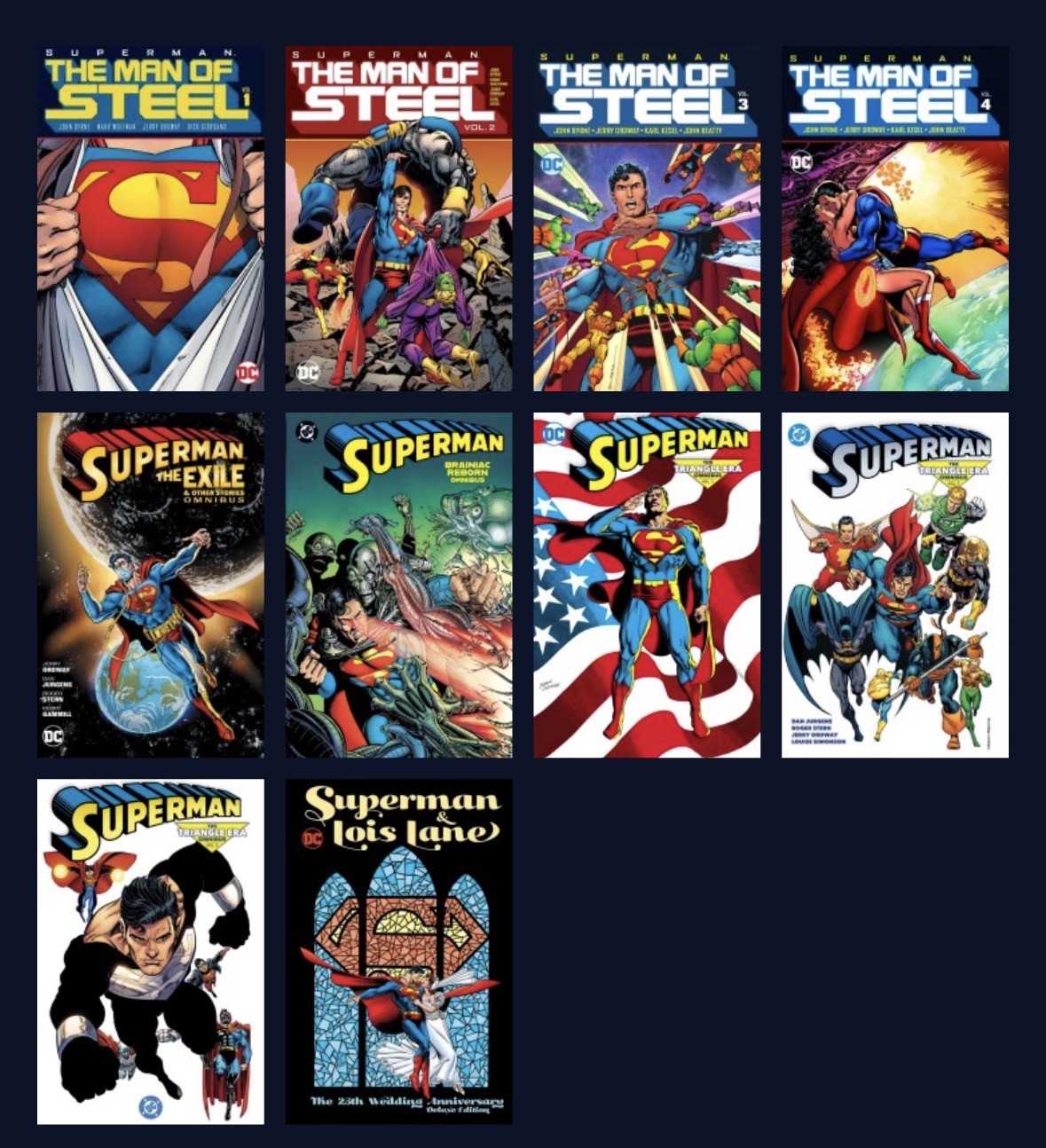
Want to buy Post-Crisis Superman collections? Read this post!

Discover more from Super Fan XL - 40 Years Of Post-Crisis Superman

Subscribe now to keep reading and get access to the full archive.

Continue reading

Discover more from Super Fan XL - 40 Years Of Post-Crisis Superman

Subscribe now to keep reading and get access to the full archive.

Continue reading